Backlinks remain a cornerstone of SEO, but getting links is only half the battle. The other half? Monitoring them.
Without proper backlink monitoring, you might be losing valuable links, or even gaining harmful ones, and never know it. That’s why backlink monitoring tools are essential for anyone serious about SEO in 2025.
In this guide, you’ll discover:
- Why backlink monitoring is more essential than ever
- Core metrics you should track
- What to expect from a good tool
- A breakdown of the top backlink monitoring tools (2025 edition)
- How to build a robust monitoring workflow
- What to do when links get lost, changed or become toxic
Let’s dive in.
Why Backlink Monitoring Matters?
Getting high quality backlinks can be expensive and time-consuming, but they’re also fragile.
Links that once boosted your rankings can disappear, be turned into nofollow, or point to 404s. Sometimes, malicious actors might point spammy links to your site, hurting your SEO.
Here’s why you need to monitor your backlinks actively:
Prevent link decay & lost authority
Over time, pages get removed, restructured, or updated; your backlink might vanish overnight. Regularly tracking ensures you notice and respond quickly.
Catch spam or toxic links early
Backlink monitoring lets you spot suspicious links, analyze anchor text, and disavow harmful backlinks before they damage your domain.
Track your link-building ROI
You’ll know which links stick, which disappear, and how your backlink profile evolves, vital for measuring success.
Stay competitive
Good tools also let you track competitor backlinks, spotting opportunities for your own link strategy.
Maintain healthy backlink profile hygiene
Issues like over-optimized anchor text, too many low-quality links, or irrelevant domains can harm you. Monitoring helps you keep your profile clean and natural.
| If you care about consistent rankings and long-term SEO value, backlink monitoring isn’t optional; it’s essential. |
Backlink Metrics To Monitor
When you use a backlink monitoring tool, don’t just track “new backlinks.” Focus on metrics that matter. Here’s what you should look at regularly:
| Metric / Signal | Why It Matters |
| Referring domains & pages | More unique referring domains = stronger, diversified link profile. |
| New vs Lost backlinks | Captures link gains and losses to evaluate your current link-building progress. |
| Anchor text distribution | Over-optimized or spammy anchors can trigger penalties; variety = safer. |
| Dofollow / Nofollow status | Dofollow links pass SEO value; nofollow may still help but pass less link equity. |
| Page / Domain authority / Trust metrics | Helps you evaluate if a link comes from a credible or spammy domain. |
| Indexation status of the linking page | If the referring page is deindexed, the backlink won’t pass value |
| Link placement & context | Contextual/in-content links carry more weight than site-wide or footer links. |
| Changes over time (dates, link health, status changes) | Allows you to spot patterns, link decay, site redesigns, link removals, etc. |
| Toxicity or spam signals | Helps protect from negative SEO, bad actors, or low-quality directories, bad linking domains, and PBNs. |
Tracking these metrics regularly, monthly, quarterly, or in real time, lets you keep full control over your backlink profile and respond proactively when something goes wrong.
What Makes a Good Backlink Monitoring Tool in 2026
With many tools available, how do you choose the right one? Here’s what to expect from a high-quality backlink monitoring tool today:
- Large backlink index and frequent updates ensure fresh, accurate data.
- Easy-to-use dashboard with clear reports (new links, lost links, anchor text, domain metrics)
- Alerts & notifications (when links drop, change status, or when toxic links appear)
- Competitor backlink tracking — to spy on rivals and discover opportunities.
- Ability to export data (CSV/PDF) or integrate with disavow tools — great for outreach agencies or cleanup efforts
- Metrics beyond just “link exists”, page authority, anchor text analysis, follow/nofollow status, spam scores, link context, and indexing data.
- Scalability, ability to handle multiple domains, large backlink volumes, and agency-level workloads.
- Reporting capabilities, white-label or client-friendly reporting (if you manage SEO for others)
If a tool lacks most of these, it’s more of a backlink checker than a robust monitoring system, fine for quick checks, but insufficient for serious SEO work.
Backlink Monitoring Tools in 2026: Pros, Cons & When to Use Them
Ahrefs
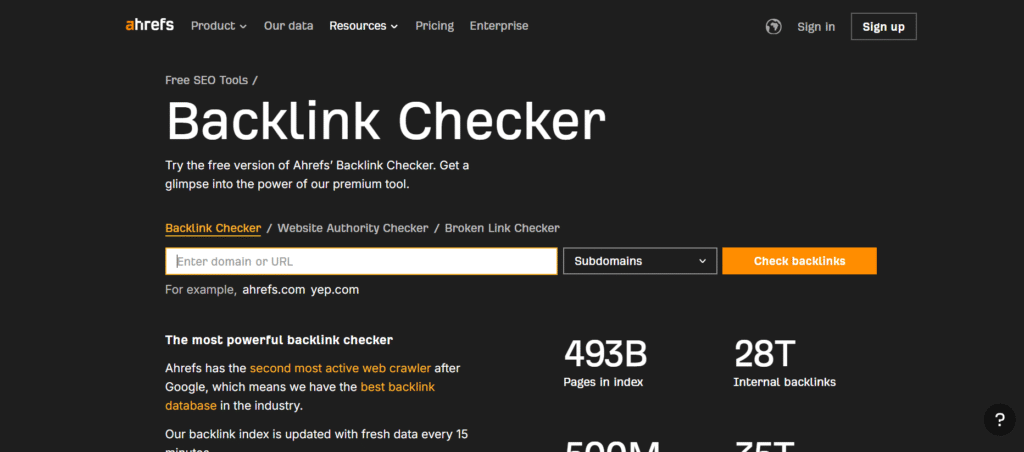
Ahrefs remains one of the most respected and widely used backlink monitoring tools for serious SEO professionals and agencies. Its massive index — one of the largest in the industry — is continuously updated, giving access to a vast repertoire of backlinks, new and lost link alerts, anchor-text distribution, referring domains and pages, and a full “site explorer” view that enables deep backlink audits.
Beyond just monitoring, Ahrefs bundles powerful SEO tools: keyword research, content explorer, technical SEO audits, and competitive analysis — making it a one-stop shop for holistic SEO management.
Pros:
- Massive, frequently updated backlink database — giving a near-comprehensive view of your link profile.
- Robust linking data: lost/new link alerts, broken-link detection, link intersect (compare with competitors), anchor-text analysis, and comprehensive domain metrics.
- Multi-feature SEO toolkit — you get more than just backlink data (content, keyword, audit, competitor research).
Cons:
- Expensive — higher cost may be too much for small sites or solo bloggers.
- Learning curve — the interface and volume of data can be overwhelming for beginners.
- If you don’t use the full suite (keyword tools, audits, etc.), you may not get full value for money.
Best for: Large websites, agencies managing multiple clients, SEO professionals needing detailed backlink audits, and sites that rely heavily on link-based authority and competitor tracking
SEMrush
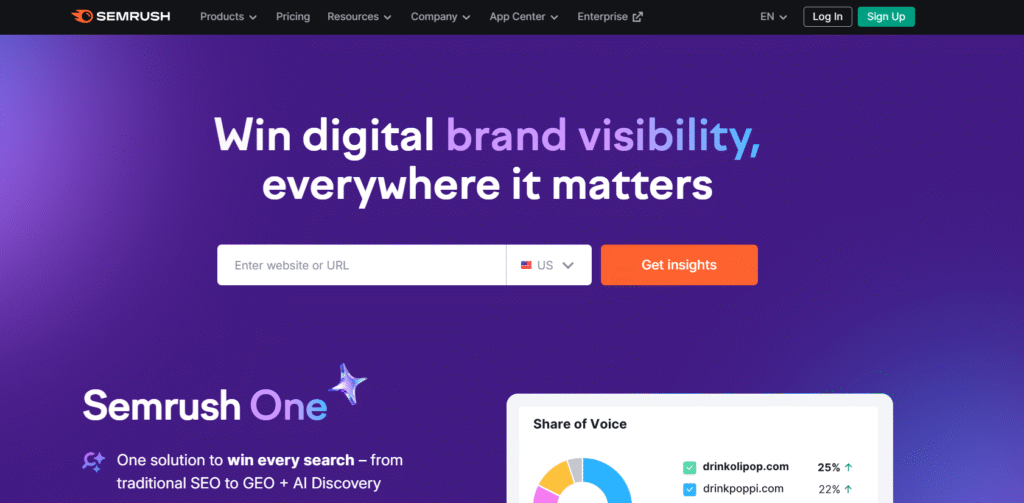
SEMrush is a robust all-in-one SEO platform that includes comprehensive backlink monitoring as part of a broader suite. Its backlink analytics can track new, lost, and broken links, run backlink audits to flag toxic or spammy links, and perform competitor backlink gap analysis to discover link-building opportunities you might have missed.
Because of its breadth, SEMrush is particularly useful when backlink monitoring is just one part of a larger SEO strategy — including keyword research, site audits, content planning, and competitive research.
Pros:
- Massive backlink database (some reports claim up to ~43 trillion links tracked).
- Real-time (or very frequent) updates and alerts — useful for catching lost or broken links quickly.
- Integrated SEO toolkit — links + keywords + site audits + competitor analysis, which can streamline workflows especially for agencies or larger teams.
Cons:
- Pricey — full features are often overkill (and expensive) for small sites or when you only need basic link monitoring.
- The interface can feel cluttered and overwhelming, especially for beginners or smaller teams.
- Because of its broad feature set, sometimes backlink data may lag or have inconsistencies compared with “specialist” backlink tools.
Best for: SEO teams, content marketing agencies, medium-to-large businesses, or anyone who wants to manage all SEO aspects (link-building, keyword strategy, site health) in a single platform.
Linkody
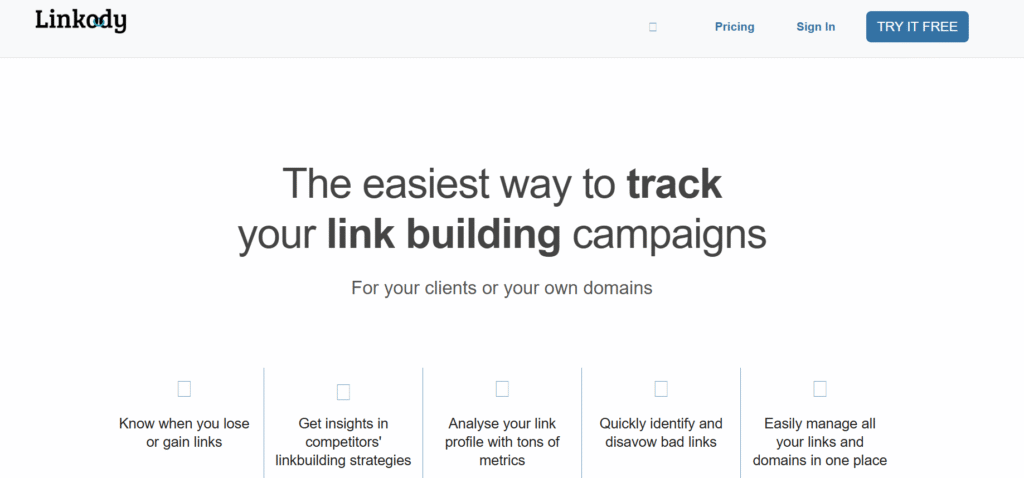
Linkody is a specialized backlink monitoring tool, not a full SEO suite, designed to do one thing well: track your backlinks. It automatically scans your backlinks daily, sends alerts when links are lost, gained, or changed, and provides useful metrics like page/domain authority, spam score, anchor text, follow/nofollow status, and link context.
It also supports competitor backlink tracking and generates white-label reports, which makes it a smart pick for freelancers or small agencies managing multiple client sites.
Pros:
- Very affordable compared to large SEO suites — a budget-friendly entry point for backlink monitoring.
- Automated daily scanning + email alerts — convenient and low-maintenance monitoring.
- Simple, clean interface — easy to use even for beginners or those who only want basic backlink oversight.
- Competitor backlink tracking & reporting — useful for small agencies or freelancers who manage multiple domains.
Cons:
- Limited to backlink monitoring — lacks keyword research, content tools, technical audits, and broader SEO features.
- Smaller backlink index compared with industry leaders — may miss newer or more obscure backlinks.
- For large sites or advanced link-building strategies, the lack of additional SEO capabilities can mean needing other tools in parallel.
Best for: Freelancers, small businesses, smaller websites, or anyone who wants a simple, low-cost way to keep track of backlinks without needing the full SEO toolkit.
Majestic
Majestic focuses more narrowly on backlink analysis rather than full SEO management. It offers proprietary metrics such as Trust Flow, Citation Flow, and Topical Trust Flow — metrics many SEOs trust to evaluate the quality, credibility, and topical relevance of backlinks.
One of Majestic’s unique strengths is its “Link Context” and “Historical Index” features: you can see where a backlink sits on the page (in-content vs footer vs sidebar), how old it is, and analyze link history over time. That depth helps you better assess the true value and risks associated with each backlink.
Pros:
- Highly respected metrics for link quality and topical relevance — excellent for evaluating link prospects or cleaning up link profiles.
- In-depth backlink context and historical data — helps detect whether links are natural, editorial, or spammy.
- Usually cheaper than full-suite tools for pure backlink analysis.
Cons:
- Doesn’t offer keyword research, content audit, or full SEO functions — you’ll need other tools for broader SEO work.
- Interface and UX feel more dated compared to newer, more polished platforms.
- Since it’s a specialist, it may not be ideal as a standalone solution if you want all-in-one coverage.
Best for: SEO professionals, link-builders, or agencies focusing especially on link quality audits, backlink harvesting, or risk assessments — ideal when you want to vet link prospects carefully or clean up an existing link profile.
SEOptimer
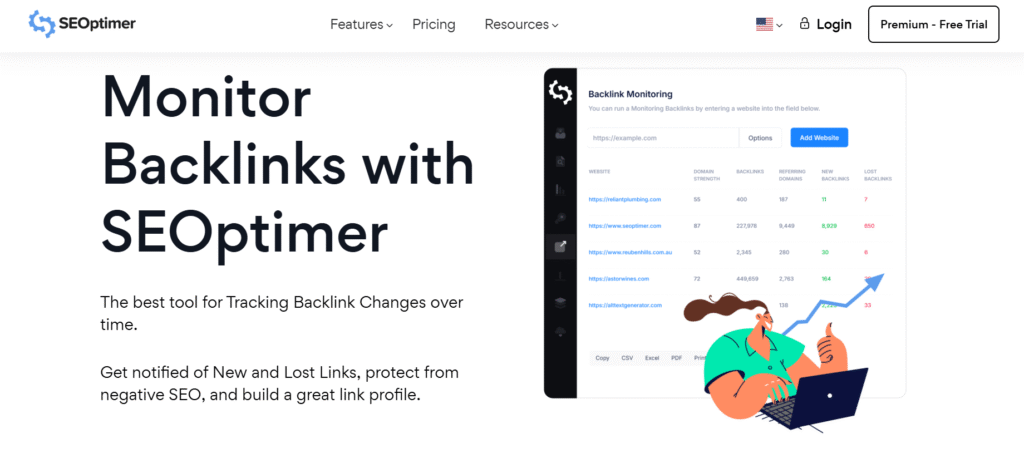
SEOptimer Backlink Monitor is a dedicated backlink-monitoring solution — formerly known simply as Monitor Backlinks — that was incorporated into SEOptimer’s suite. It focuses primarily on tracking backlinks: monitoring their status (live, lost, nofollow, broken), alerting when links change or disappear, and giving you a history log of link events.
Instead of being part of a massive SEO toolset, SEOptimer Backlink Monitor aims to be a lightweight, straightforward monitoring service, appealing especially to small businesses, freelancers, or anyone who needs reliable link tracking without complexity.
Pros
- Focused functionality, backlink tracking only: Because it doesn’t overload you with unrelated SEO features, it’s simple and easy to use. Great for site owners who want to monitor their links without learning an entire SEO suite.
- Automatic link-status alerts: You get notified when backlinks are lost, changed, or broken — so you can act quickly instead of discovering problems after traffic drops.
- Affordable / budget-friendly: As a more modestly priced tool compared with huge suites. This makes it accessible for small websites, freelancers, or anyone who doesn’t need advanced SEO features.
- Ideal for smaller link portfolios: If you link-build only occasionally or don’t have hundreds of backlinks to track, a simple tool like SEOptimer is often enough and more cost-effective than big all-in-one platforms.
Cons
- Not a full SEO suite — no deep keyword research or content analysis tools. If you need a full SEO management platform, SEOptimer alone won’t suffice.
- Smaller backlink database compared with big players. That means it may miss some newer or less-visible links that larger tools capture.
More basic link data. While it handles live/lost/broken detection well, its metrics (authority, spam score, anchor-text depth, competitor overlap analysis) are less advanced than what you’d get from heavy-duty tools like Ahrefs, SEMrush or Majestic.
What to Do When Backlinks Break, Vanish, or Turn Toxic
Backlinks aren’t permanent — but you can act fast when something changes. Here’s how:
- Link disappeared or page removed → Reach out to webmaster politely and request reinstatement (maybe page moved, updated, or accidentally deleted) link
- Link changed to nofollow / anchor changed → Assess if link still adds value; if not, consider replacement or removal request
- Referring page deindexed or entire site flagged as toxic → Remove or disavow such links to avoid negative impact
- Sudden spike in toxic/spammy backlinks (negative SEO risk) → Disavow immediately, and consider using brand-mention outreach or digital PR to counteract damage
- Link profile showing over-optimized anchor text or overly commercial anchors → Diversify anchors; build new natural links to balance profile
With monitoring + prompt action, you can safeguard your SEO and avoid silent losses that go unnoticed until rankings drop.
Final Recommendations
If you’ve built any meaningful number of backlinks (10, 50, 100+), treat monitoring as a must-have, not a “nice to have.”
- Choose a tool that matches your budget and needs (e.g. Linkody for budget, Ahrefs/SEMrush for enterprise)
- Set up a regular monitoring workflow with alerts and audits
- Maintain a backlink inventory
- React quickly to lost or toxic links
- Combine monitoring with smart link-building and content strategy
Your SEO success isn’t just in acquiring links — it’s in maintaining, protecting, and leveraging them over time. So — what’s your plan going forward?
Will you audit your existing backlinks this week?