If you still measure SEO success purely by where you rank on Google’s blue links, you’re already falling behind.
Search behavior has fundamentally shifted. Buyers are asking ChatGPT for product recommendations. Researchers are using Perplexity instead of Googling. And Google’s own AI Overviews now answer questions before a single organic result appears. The rules of visibility have changed, and most SEO teams haven’t caught up yet.
This is where AI search ranking tools become essential. They tell you whether your brand appears in AI-generated answers, which competitors are getting cited instead of you, and what you need to do to close that gap.
In this guide, we’ve evaluated and ranked the 10 best tools to track AI search rankings in 2026, covering real-world features, pricing, platform support, and who each tool is actually built for.
What Does “Tracking AI Search Rankings” Actually Mean?
Traditional rank tracking tells you your position (1–100) for a keyword on Google. AI search ranking is fundamentally different.
In AI search, there is no “position 1.” Instead, a language model generates a response that may or may not mention your brand, cite your website, or recommend your product. You either appear in the answer, or you don’t.
Tracking AI search rankings means monitoring:
- Whether your brand is mentioned when users ask relevant questions to ChatGPT, Perplexity, Gemini, Claude, or Google AI Overviews
- Which URLs are being cited as sources in AI-generated answers
- How your brand is described — positively, neutrally, or negatively
- How your share of AI visibility compares to direct competitors
- How visibility changes over time as AI models are updated
This is sometimes called GEO (Generative Engine Optimization), AEO (Answer Engine Optimization), or simply LLM visibility tracking. Whatever you call it, the underlying need is the same: understanding your brand’s footprint in AI-generated search results.
Why AI Search Visibility Tracking Matters in 2026
Here’s the uncomfortable truth: your traditional SEO metrics may look healthy while your AI search visibility is near zero.
Google AI Overviews now appear on a significant share of commercial search queries. ChatGPT crossed 1 billion weekly messages. Perplexity surpassed 100 million monthly visits. And analysts project traditional organic search traffic will continue to decline as AI answer engines absorb more queries.
If a buyer asks “What’s the best project management tool for remote teams?” and ChatGPT names three competitors without mentioning you — that’s a lead you’ve lost before they ever reached your website.
Key reasons AI search rank tracking should be in your 2026 strategy:
- Zero-click is accelerating. AI Overviews and chatbot answers frontload the decision, users often never scroll to organic results.
- Buying decisions happen inside AI responses. Brand citations in AI answers function like digital word-of-mouth at scale.
- Your competitors are already doing this. Brands actively optimizing for AI citations gain compounding authority advantages.
- Traditional tools won’t catch the gap. Google Search Console, Ahrefs, and Semrush track blue-link rankings, not whether ChatGPT recommends you.
What to Look for in an AI Search Ranking Tool
Before we get into the list, here’s what separates genuinely useful tools from dashboard theater:
1. Multi-Platform Coverage: Does it track across ChatGPT, Perplexity, Gemini, Claude, and Google AI Overviews? Single-platform tools give you an incomplete picture.
2. Prompt Tracking & Customization: Can you define your own prompts? Can it suggest prompts your buyers are actually using? The best tools let you monitor how AI answers the specific questions your customers ask.
3. Citation & Source Tracking: Which URLs is the AI pulling from? This tells you which content is winning authority — and what you need to create or improve.
4. Competitor Benchmarking: Can you measure your share of AI voice against named competitors? This turns monitoring into competitive intelligence.
5. Sentiment Analysis: Is AI describing your brand positively, negatively, or neutrally? Sentiment shifts are early warning signals for reputation issues.
6. Alerting & Reporting: Real-time or daily alerts when visibility changes — especially when a competitor overtakes you or your mentions drop.
7. Actionability: Does the tool tell you why you’re not appearing and what to do about it? The best tools bridge monitoring and optimization.
The Best Tools to Track AI Search Rankings in 2026
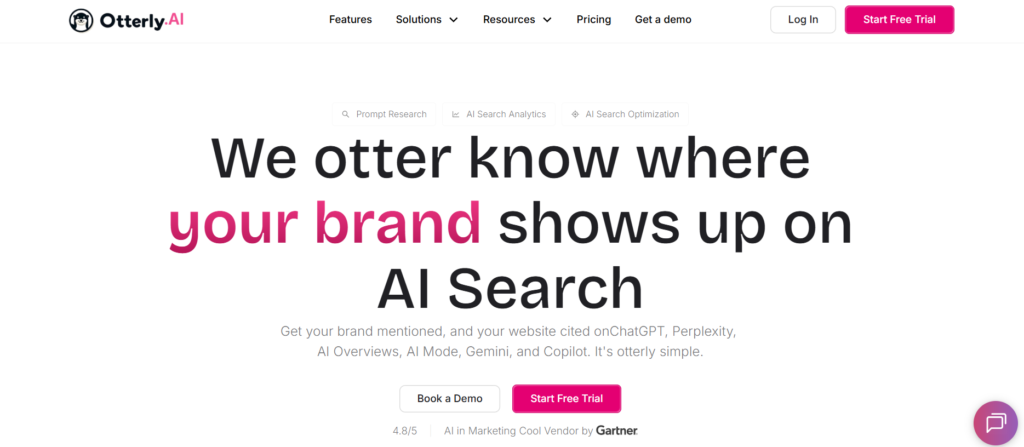
1. Otterly AI — Best for Multi-Platform AI Visibility Monitoring
Pricing: From $29/month | Free Trial: Yes
Otterly AI has become one of the most widely adopted AI search monitoring tools among marketing teams, and it earns that reputation with genuine platform breadth.
It tracks brand mentions across Google AI Overviews, ChatGPT, Perplexity, Gemini, Claude, and Google AI Mode, covering the full spectrum of where buyers now discover brands. Its “Share of AI Voice” metric shows what percentage of relevant AI responses mention your brand versus competitors, giving you a market-share view of AI visibility.
Key Features:
- Multi-platform tracking across all major AI search engines
- Linked and unlinked citation tracking
- Competitor benchmarking and “Share of AI Voice” scoring
- Real-time alerts when visibility changes
- Clean, intuitive dashboard
Best For: In-house marketing teams and agencies that need solid AI visibility data without a steep learning curve. The $29/month starting price makes it accessible for smaller teams, too.
Watch Out: Less suited for teams that need deep prompt research capabilities or integration with broader SEO workflows.
2. Nightwatch — Best for Combined AI + Traditional SEO Tracking
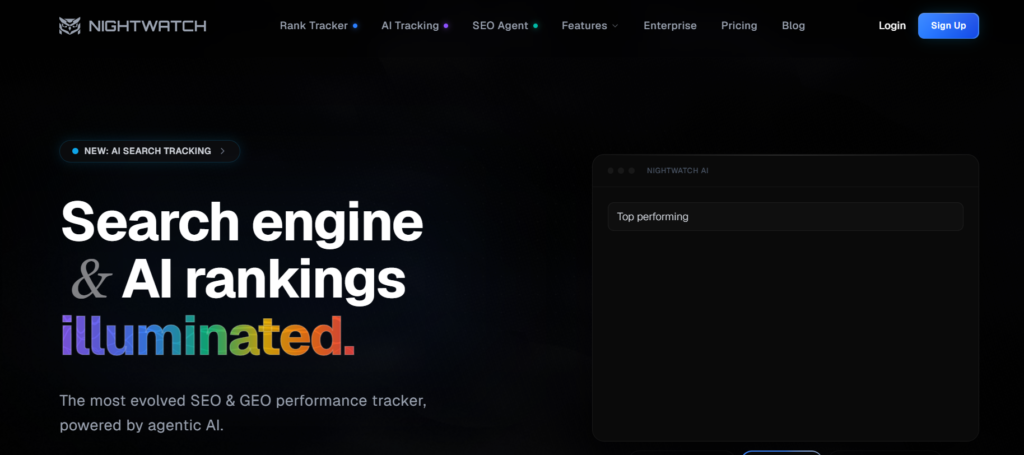
Pricing: From $32/month | Free Trial: 14 days
Nightwatch originally built its reputation as a precise rank tracker, and its AI tracking expansion is one of the most technically sophisticated in the market.
What sets Nightwatch apart is dual-layer tracking: it monitors not just how your brand appears in AI-generated answers, but also the real-time web searches that AI models perform to retrieve current information. This means you can see the full pipeline — the queries AI systems run, the sources they pull from, and how your brand ultimately appears in the final response.
It’s also the only tool on this list that meaningfully integrates LLM monitoring with traditional rank tracking, site audits, keyword research, and an SEO AI agent in a single platform.
Key Features:
- Tracks LLM responses AND the search queries AI systems run to gather data
- Multi-platform monitoring: Google AI Overviews, ChatGPT, Claude, Perplexity
- Historical trend data, not just snapshots
- Competitor visibility benchmarking
- Built-in traditional SEO tools (rank tracking, site audit, keyword research)
- SEO AI Agent for task automation
Best For: SEO teams and agencies that want a single platform for both AI and traditional search visibility.
Watch Out: The depth of features means a steeper learning curve than simpler tools.
3. Rankability — Best for Agencies Running Full SEO Workflows
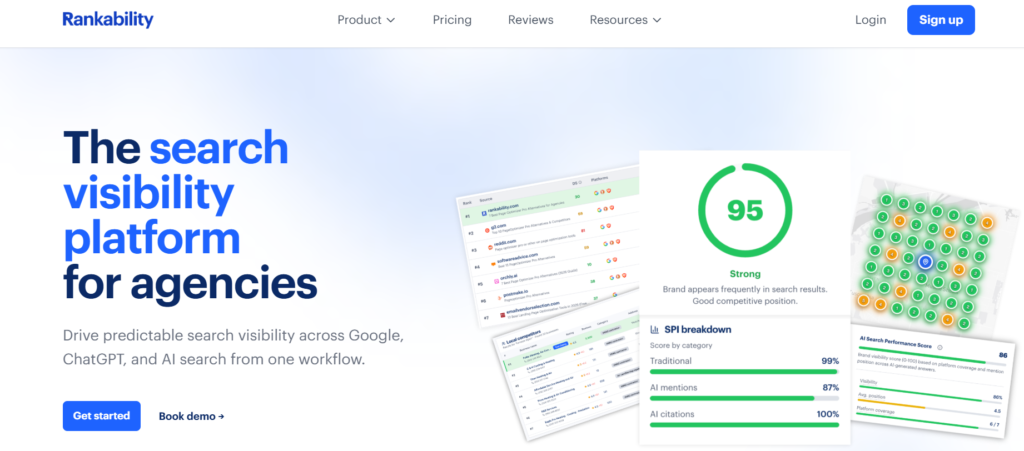
Pricing: From $149/month | Free Trial: Available
Rankability takes a different approach: rather than building a standalone AI monitoring product, it integrates AI search tracking directly into a broader SEO content and strategy platform.
You can test branded and commercial prompts across major AI answer engines, compare how your pages get cited versus competitors, and act on those gaps without exporting CSVs to another tool. Because AI tracking sits alongside keyword research, content creation, and technical audit capabilities, agencies can run a complete optimization cycle from one workspace.
Its SPI (Search Presence Index) scoring gives clients a single metric that combines traditional and AI search visibility.
Key Features:
- Prompt-level testing across AI search engines
- Competitive citation comparison
- Integrated with content creation and keyword research workflows
- SPI (Search Presence Index) combines Google + AI visibility scoring
- White-label reporting for agency clients
Best For: Digital agencies that want AI search visibility data embedded in their existing SEO content workflows.
Watch Out: Higher starting price makes it less accessible for solo operators or very small teams.
4. Peec AI — Best Budget-Friendly Option with Solid Coverage
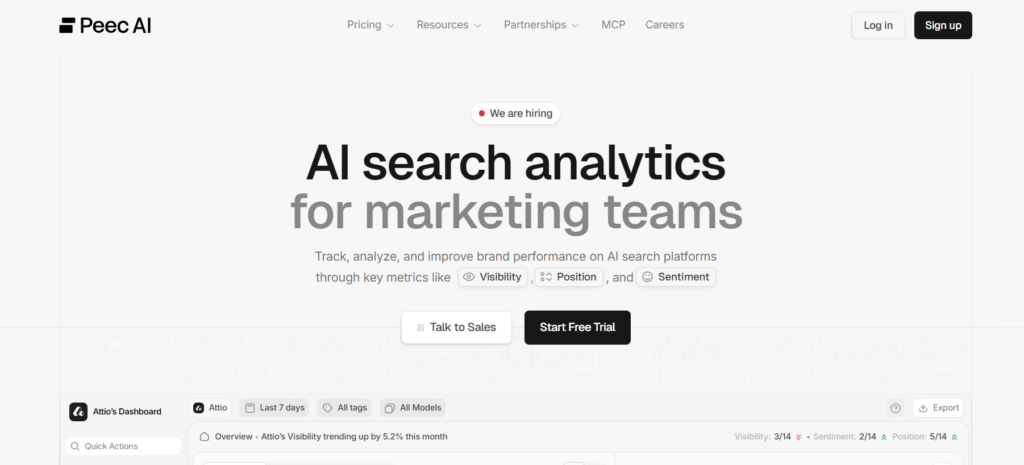
Pricing: From $99/month | Funding: $1.9M
Peec AI punches above its weight class for a funded startup in this space. It delivers reliable multi-platform tracking at a mid-range price point that undercuts most enterprise alternatives significantly.
The tool covers the major AI search platforms and provides prompt-based tracking with competitive benchmarking. For teams that need honest LLM visibility data without paying $300–$500/month, Peec AI is consistently a top recommendation.
Key Features:
- Brand monitoring across major AI platforms
- Prompt-level tracking and customization
- Competitor share-of-voice comparison
- Clean reporting dashboard
Best For: Growing teams and mid-size agencies that need reliable AI visibility tracking without enterprise pricing.
Watch Out: Fewer advanced features than enterprise tools; integration ecosystem is still developing.
5. Scrunch AI — Best for Enterprise Brand Monitoring & Compliance
Pricing: From $300/month | Funding: $19M
Scrunch AI is built for enterprise teams managing complex, multi-brand visibility across AI platforms, especially in regulated industries where how AI describes your brand has legal and compliance implications.
It offers advanced sentiment tracking, citation analysis, and brand narrative monitoring across a wide range of AI search engines. The $19M in funding signals serious enterprise investment, and the product shows it.
Key Features:
- Deep brand narrative and sentiment monitoring
- Multi-brand management for enterprise portfolios
- Compliance-oriented monitoring for regulated industries
- Detailed citation source analysis
- Dedicated support and onboarding
Best For: Enterprise marketing teams, regulated industries (finance, healthcare, legal), and brands with serious brand reputation concerns in AI search.
Watch Out: Pricing puts it out of reach for most SMBs and smaller agencies
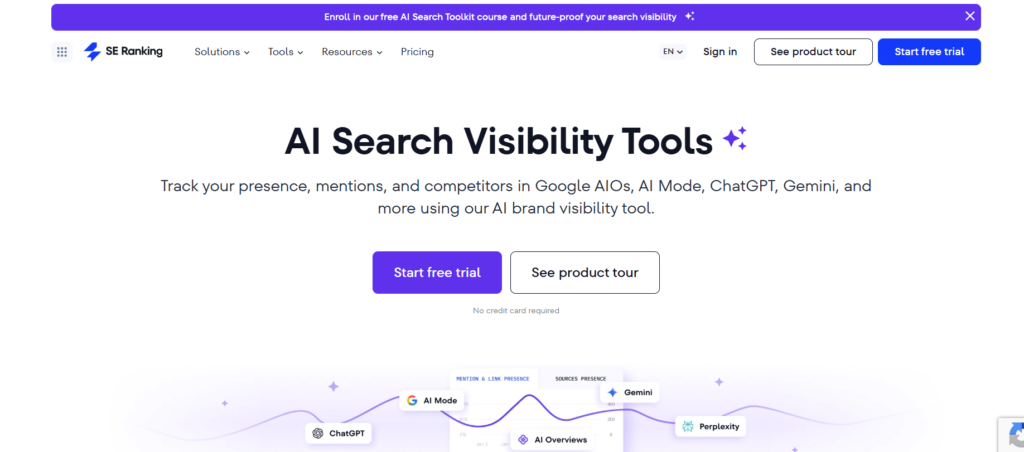
6. SE Ranking AI Visibility Tracker — Best for Teams Already Using SE Ranking
Pricing: From $119/month (as part of SE Ranking suite)
SE Ranking is a well-established traditional SEO platform that has added meaningful AI search visibility capabilities to its suite. For teams already using SE Ranking for rank tracking and site audits, the AI Visibility Tracker is a natural extension with no new tool to onboard.
It covers Google AI Overviews, ChatGPT, and Perplexity, and integrates AI visibility data alongside traditional keyword ranking and backlink data.
Key Features:
- Tracks Google AI Overviews, ChatGPT, Perplexity
- Integrated with SE Ranking’s traditional rank tracking
- Keyword-to-AI-mention correlation
- Reporting dashboard with white-label options
Best For: Existing SE Ranking customers who want to add AI visibility monitoring without switching platforms.
Watch Out: If you’re not already an SE Ranking user, the full suite pricing may exceed what you’d pay for a dedicated AI tracking tool.
7. Profound — Best Enterprise LLM Tracking
Pricing: From $499/month | Funding: $58.5M
Profound is the most heavily funded pure-play LLM tracking tool in this space, and it’s purpose-built for large enterprise teams with complex needs.
The platform focuses specifically on LLM monitoring, how your brand appears across major language models, with deep analytics, custom reporting, and dedicated enterprise support. The $58.5M in funding gives it a strong development roadmap.
Key Features:
- Enterprise-grade LLM monitoring
- Deep analytics and trend reporting
- Custom enterprise reporting
- Dedicated customer success support
- High-volume prompt testing
Best For: Large enterprises with significant budgets and complex multi-market brand monitoring needs.
Watch Out: No traditional SEO tools, no prompt research features, and pricing starts at $499/month, it’s a focused enterprise tool, not a broad SEO platform.
8. LLMrefs — Best Affordable Entry Point for AI Citation Tracking
Pricing: From $79/month
LLMrefs does one thing and does it well: it tracks which websites and URLs are being cited in AI-generated answers across major platforms. If your primary goal is understanding which content is earning AI citations, and which competitor pages you need to beat, this is one of the most cost-effective ways to get that data.
Key Features:
- Citation tracking across ChatGPT, Perplexity, and Gemini
- URL-level source analysis
- Competitor citation comparison
- Simple, focused interface
Best For: Content teams and SEO managers focused specifically on earning more AI citations rather than comprehensive brand monitoring.
Watch Out: Limited to citation tracking, doesn’t offer sentiment analysis, prompt research, or deep competitive intelligence.
9. Semrush AI Toolkit — Best for Large Teams With Existing Semrush Investment
Pricing: From $745/month (Enterprise)
Semrush has integrated AI search visibility tracking into its enterprise suite, making it an option for large teams already paying for Semrush at the top tier. The AI Toolkit layers AI answer monitoring on top of Semrush’s already comprehensive keyword, backlinks, and content capabilities.
Key Features:
- AI Overview tracking is integrated with traditional Semrush data
- Multi-platform AI mention monitoring
- Full Semrush suite integration
- Enterprise reporting and collaboration tools
Best For: Large enterprise teams with existing Semrush contracts who want AI visibility added to their existing workflow.
Watch Out: At $745/month-plus, it only makes financial sense if you’re already a heavy Semrush user. Standalone AI tracking tools deliver comparable monitoring for a fraction of the price.
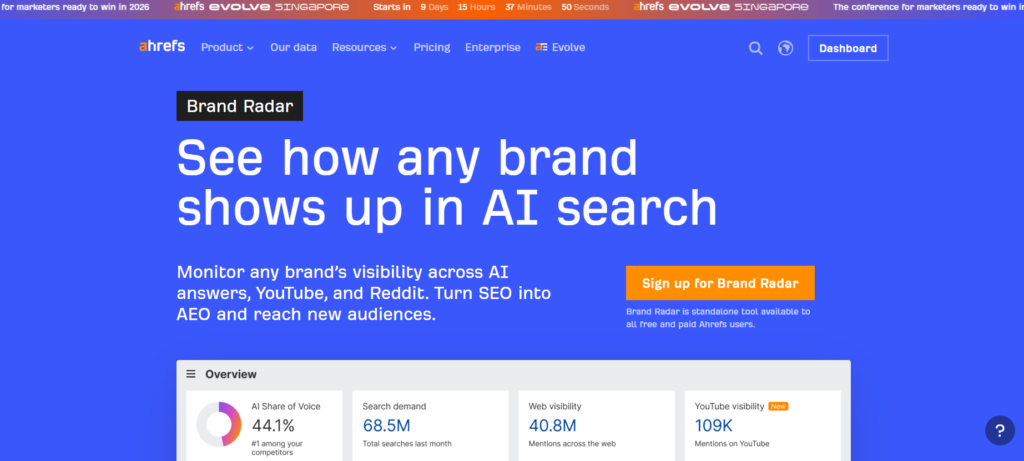
10. Ahrefs Brand Radar — Best for Backlink-Centric Teams Expanding into AI
Pricing: From $699/month
Ahrefs’ Brand Radar brings AI brand mention monitoring to teams that live inside Ahrefs for link building and authority analysis. It connects traditional backlink and authority signals to AI citation data, showing how your link profile influences your AI search visibility.
Key Features:
- AI brand mention monitoring
- Connected to Ahrefs’ backlink and authority data
- Competitor brand visibility comparison
- Integrated with existing Ahrefs workflows
Best For: SEO teams running link-building campaigns who want to understand how earned links translate into AI citation authority.
Watch Out: Premium pricing; primarily valuable if you’re already an Ahrefs enterprise customer.
Quick Comparison: AI Search Tracking Tools at a Glance
| Tool | Starting Price | Best For | Multi-Platform | Free Trial |
| Otterly AI | $29/mo | All-around AI monitoring | ✅ | ✅ |
| Nightwatch | $32/mo | AI + traditional SEO combo | ✅ | ✅ 14 days |
| LLMrefs | $79/mo | Citation tracking on a budget | ✅ | — |
| Peec AI | $99/mo | Mid-market teams | ✅ | — |
| Rankability | $149/mo | Agency SEO workflows | ✅ | ✅ |
| SE Ranking AI | $119/mo | Existing SE Ranking users | Partial | ✅ |
| Scrunch AI | $300/mo | Enterprise & compliance | ✅ | — |
| Profound | $499/mo | Large enterprise LLM tracking | ✅ | — |
| Semrush AI | $745/mo | Semrush enterprise users | Partial | — |
| Ahrefs Brand Radar | $699/mo | Link-building focused teams | Partial | — |
Final Verdict
The shift from keyword ranking to AI visibility tracking isn’t coming, it’s already here. The question is whether your team is measuring it.
For most SEO teams and agencies in 2026, Otterly AI and Nightwatch offer the best combination of features, platform coverage, and value. Otterly AI wins on simplicity and price. Nightwatch wins on depth and its unique ability to bridge AI and traditional search tracking in one platform.
If you’re an agency managing clients at scale, Rankability deserves a serious look for its workflow integration. If budget is the primary constraint, LLMrefs at $79/month gives you meaningful citation data without the overhead.
Whatever tool you choose, start tracking now. The brands building AI visibility today are setting the citations that will shape buyer decisions for years to come.
Frequently Asked Questions
What is AI search ranking tracking?
AI search ranking tracking refers to monitoring whether and how your brand, product, or content appears in AI-generated search responses from platforms like ChatGPT, Perplexity, Gemini, Claude, and Google AI Overviews.
How is AI search visibility different from traditional SEO rankings?
Traditional SEO tracks your numerical position (1–100) for keywords on Google. AI search visibility tracks whether your brand is mentioned in AI-generated answers, which don’t have numbered positions — you’re either cited or you’re not.
Which AI search engines should I be tracking?
At a minimum: Google AI Overviews, ChatGPT, Perplexity, and Gemini. These four platforms collectively account for the vast majority of AI-driven search behavior in 2026. Claude is also worth including for more comprehensive monitoring.
Can I track AI search rankings for free?
Most tools offer free trials. Otterly AI and Nightwatch both offer trials without requiring a long-term commitment. There are limited free tools, but for meaningful ongoing tracking, a paid tool is necessary.
How do I improve my brand’s visibility in AI search results?
Focus on creating authoritative, structured content that directly answers the questions your buyers ask. Earning citations on respected third-party sites, building topical authority through content clusters, and ensuring your brand is accurately represented across the web all help increase the frequency of AI citations.