Link building remains one of the most influential and debated areas of SEO. While Google’s algorithms continue to evolve with AI, machine learning, and semantic search, backlinks are still consistently cited by SEO experts as a top ranking factor.
In 2026, link building is no longer about volume. It is about authority, relevance, editorial trust, and data-driven execution. To understand where link building stands today and where it is heading, we analyzed statistics, surveys, and insights from leading SEO reports and industry experts.
This guide compiles the most important link building statistics for 2026, sourced from authoritative studies and expert analyses, making it a go-to reference for marketers, SEOs, publishers, and researchers.
Importance of Link Building
Backlinks remain one of Google’s strongest off-page ranking signals. Despite algorithm updates targeting spam and manipulation, trusted links continue to signal credibility, authority, and relevance.
Key findings from industry research show:
Pages ranking in the top positions on Google consistently have more referring domains than lower-ranking pages
Google itself has confirmed that links help its systems discover content and determine authority
Most SEO professionals still consider link building among the top three SEO priorities
Over 90% of SEO professionals believe backlinks have a strong impact on organic rankings.
Reports from the SEO community suggest that link building is viewed as more challenging than ever, yet it is also considered more crucial due to increasingly competitive SERPs and the rise of LLMs.
What’s more, 86% of marketers actively invest in link building as part of their SEO strategy. These statistics reinforce a clear conclusion: link building is still essential in 2026, but only when done strategically and ethically.
Top Link Building Statistics for 2026
Below is the most comprehensive collection of link building and backlink statistics, organized into focused sub-sections to help readers, journalists, and SEOs reference specific insights.
Backlinks and Google Rankings Statistics
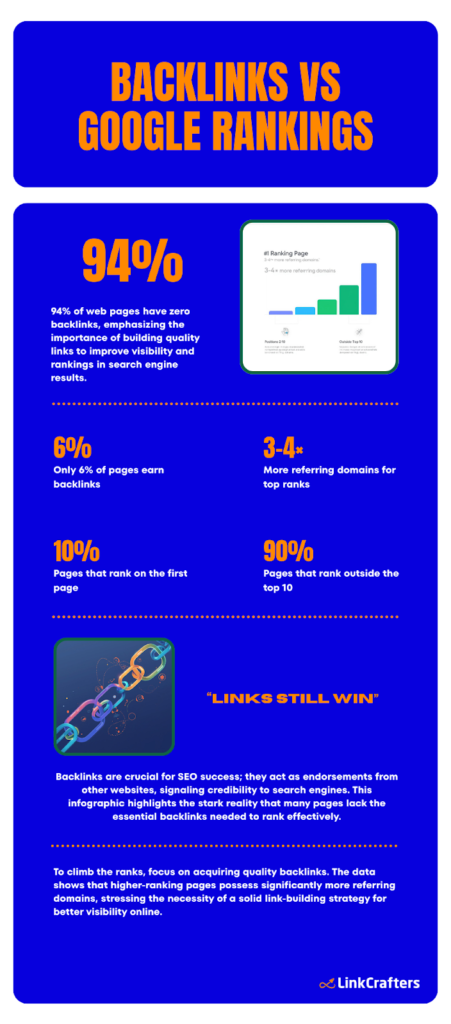
- Pages ranking #1 on Google have significantly more backlinks than pages ranking outside the top 10.
- The average #1 ranking page has 3–4× more referring domains than pages ranking 2–10.
- Over 66% of web pages have zero backlinks, meaning most content never earns links.
- 94% of online content receives no external links at all.
Domain Authority and Link Equity Statistics
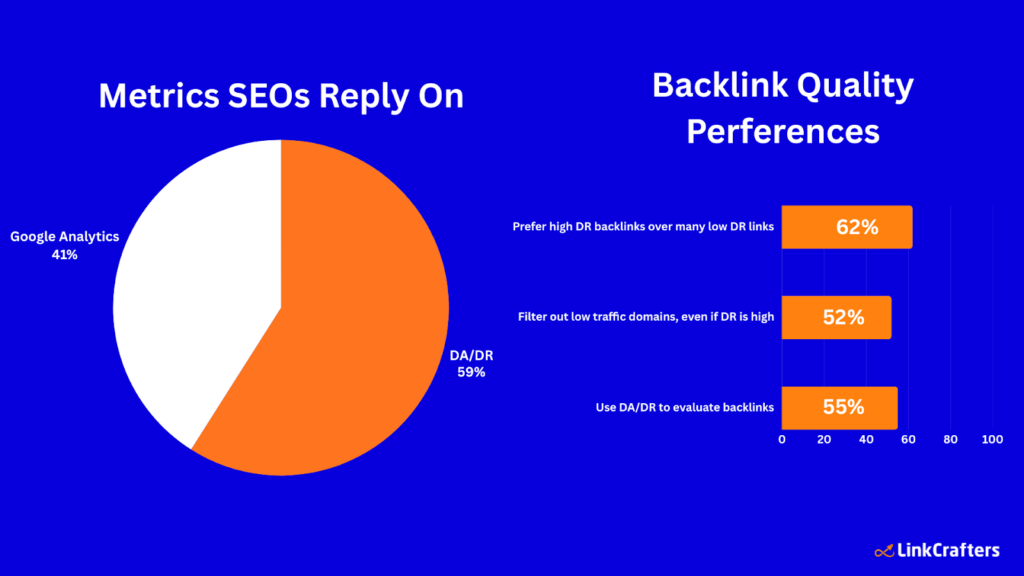
- 59% of SEO professionals rely on Domain Rating (DR) or Domain Authority (DA) as a core link quality metric given by Ahrefs and Moz, respectively. Others 41% reply on Google search console or Google analytics.
- Over 60% of SEOs think a backlink from a DR 60+ domain is more valuable than many low-DR links combined.
- 52% of agencies filter out backlinks from domains with low traffic, even if DR is high, underscoring that metrics should be combined.
- 42–67% of marketers use DA/DR to evaluate backlinks. DR tends to be more popular overall.
- Higher-authority domains pass more ranking equity, even with fewer links
- SEOs report that relevance + authority outperform raw DA alone
Content and Backlink Acquisition Statistics
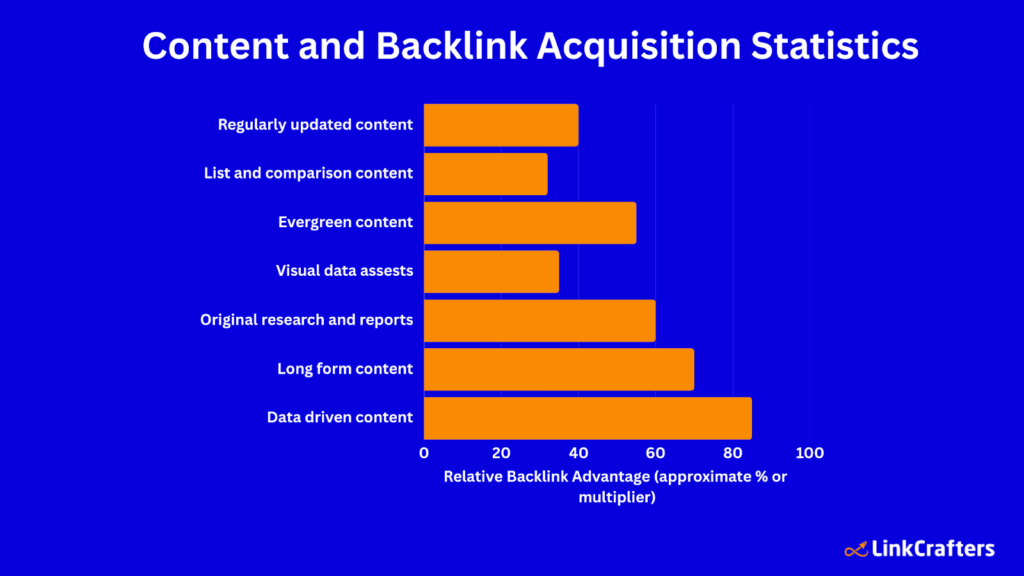
- Data-driven content earns approximately 2–3× more backlinks than non-data-based content, with studies showing that articles containing original research, proprietary data, or unique insights generate 70–90% more referring domains than generic blog posts.
- Long-form content exceeding 2,000 words attracts significantly more backlinks, earning on average 56–77% more referring domains compared to short-form articles under 1,000 words.
- Pages focused on original research, statistics, and industry reports consistently rank among the most link-attracting formats, with over 60% of high-authority backlinks pointing to data-centric resources rather than opinion-based content.
- Content that includes visual data assets such as charts, graphs, and infographics receives 30–40% more backlinks than text-only pages, as visual elements increase citation and reference value.
- Evergreen content demonstrates sustained backlink growth over time, with approximately 50–60% of total backlinks acquired more than three months after initial publication.
- List-based and comparison content attracts 25–40% more referring domains than narrative or editorial-style articles, largely due to higher usability and reference intent.
- Pages ranking on the first page of search results earn 3–5× more backlinks than pages ranking beyond position 10, highlighting a strong correlation between search visibility and link acquisition.
Regularly updated content earns up to 40% more backlinks than outdated pages, as freshness signals relevance and reliability to linking domains.
Link Quality vs Link Quantity Statistics
Industry Consensus on Quality Over Quantity
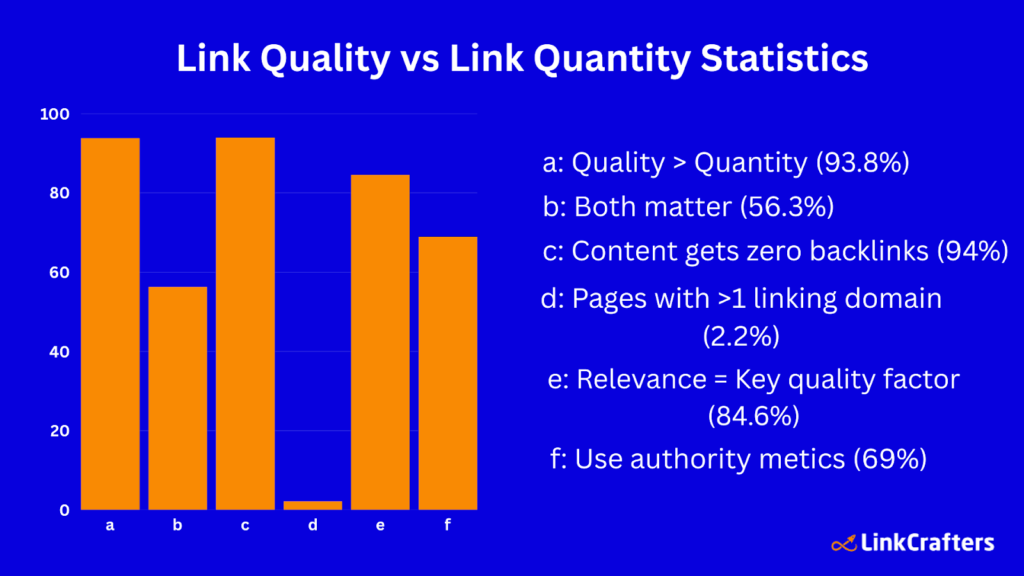
- 93.8% of link builders say link quality beats link quantity, showing overwhelming agreement among SEO pros.
Majority Still See Both as Important
- 56.3% of SEO professionals think both quality and quantity matter, but quality is significantly more valued than quantity (only 7.8% said quantity matters more).
Massive Share of Content Never Gets Backlinks
- 94% of online content earns zero external backlinks, highlighting how rare any link is, let alone high–quality ones.
Very Few Pages Get Multiple Links
- Only 2.2% of web pages get links from more than one website, showing how hard authoritative links are to earn.
Relevance Is a Major Quality Indicator
- 84.6% of SEO experts say relevance is the most critical factor in link quality (higher even than authority metrics).
Top Rankings Correlate With Better Links
- Pages ranking in the top 10 on Google have 3.8× more backlinks than pages lower on the same results page.
Domain Relevance & Authority Metrics Matter
- 69% of SEOs rely on domain authority metrics (e.g., Ahrefs DR) to evaluate link quality.
Anchor Text and Linking Practices Statistics
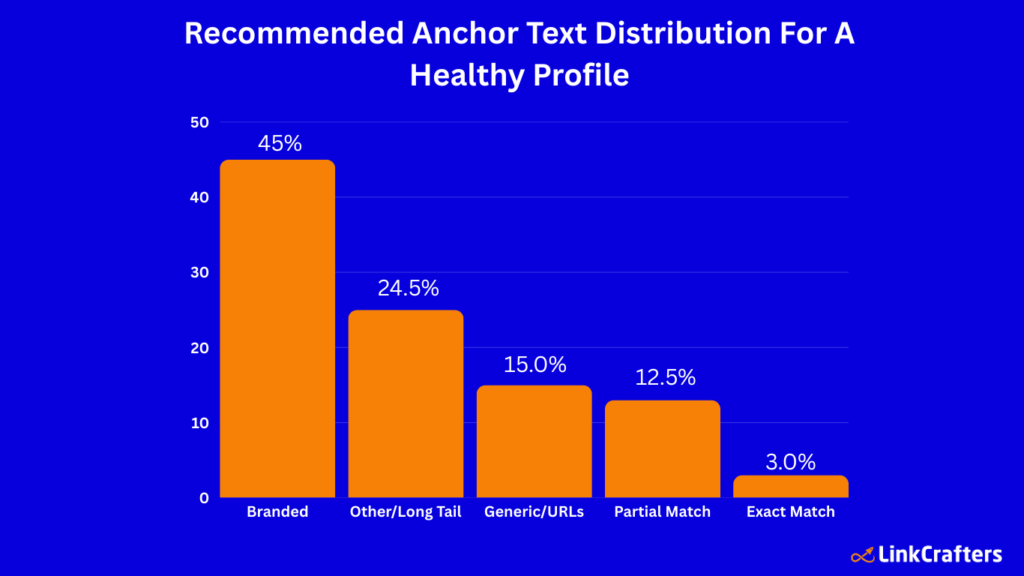
Branded Anchors Dominate Link Profiles
- 40–50% of backlinks are typically branded anchor text in healthy link profiles, showing natural linking behavior.
- Some SEO benchmarks suggest 35–50% of anchors in strong backlink profiles are branded, making them the safest and most natural type.
Exact-Match Anchors Are Used Sparingly
- Exact-match anchors are generally kept between 1–5% of total anchors in modern SEO to avoid over-optimization signals.
- Profiles where exact-match anchors exceed ~10% often trigger spam filters or penalties from search engines.
Natural Anchor Distribution Is Critical
- Healthy link profiles often show branded + generic + partial anchors comprising ~60-80% of the total, with exact match kept very low.
- Generic or non-keyword anchors (e.g., “click here,” URLs) typically account for 10–20% of anchors, helping the profile appear natural.
Partial & Related Anchors Provide Context
- Partial-match or related anchor text types usually make up 10–15% of a natural anchor profile, giving contextual relevance without over-optimizing.
Anchor Text Diversity Practices
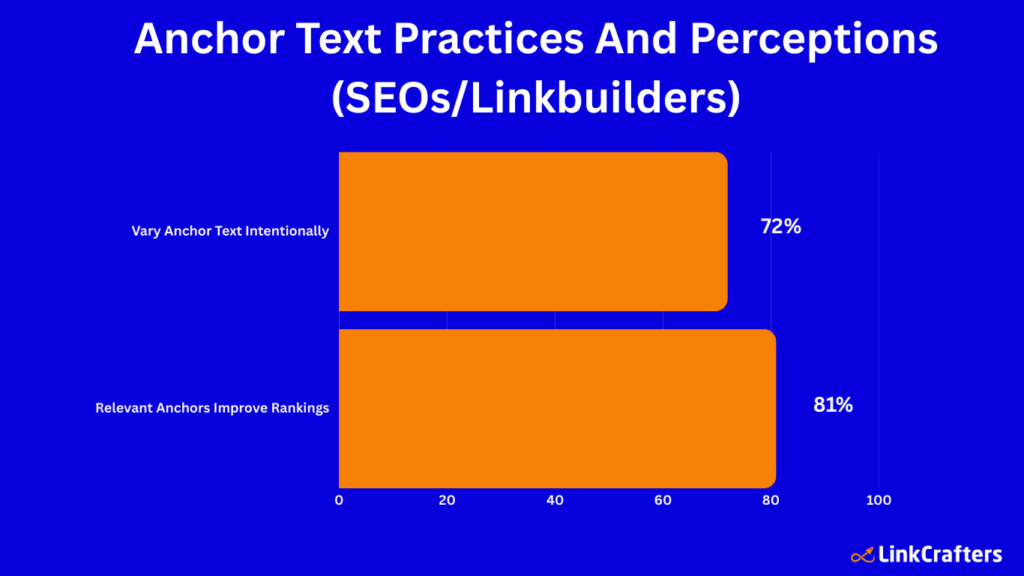
- Around 72% of link builders intentionally vary anchor text to maintain balanced, natural link profiles.
- 81% of SEOs say hyper-relevant anchor text can improve keyword rankings up to 15% faster than overly generic linking.
Guest Posting and Outreach Statistics
Guest Posting Acceptance & Performance
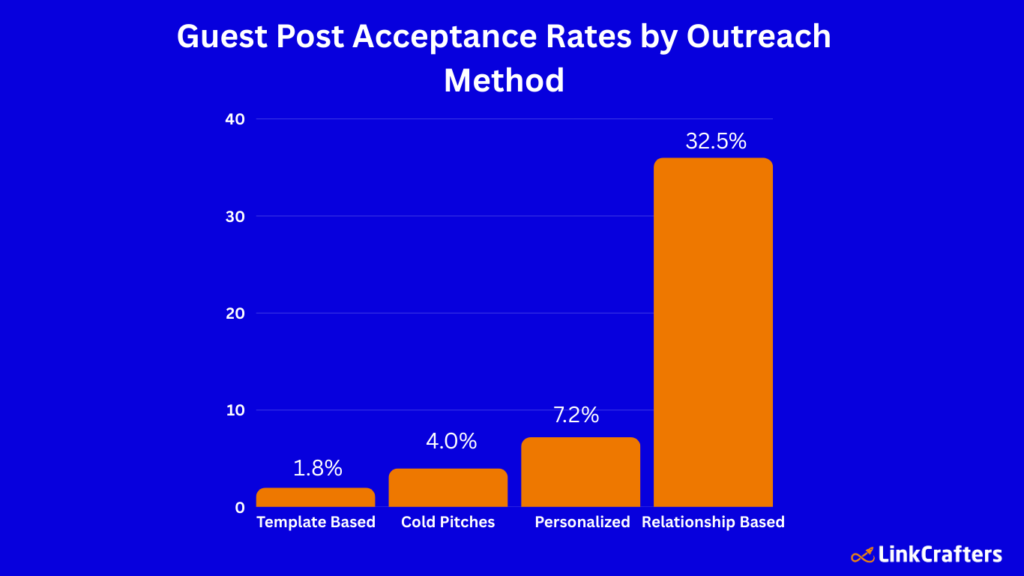
- Cold guest post acceptance rates are very low: Typically only about 3–5% of cold guest post pitches get accepted.
- Template-based pitches perform poorly: Only 1.8% acceptance for generic outreach without personalization.
- Personalization boosts acceptance: Pitches with personalization see acceptance rates of 7.2%.
- Relationship-based outreach is far more effective: Ongoing relationships can yield 25–40% acceptance rates.
- Only about 25% of blogs accept unsolicited guest post pitches.
- Over 50% of sites prefer authors with a Domain Authority (DA) of 40+.
Guest Post Pitch Factors
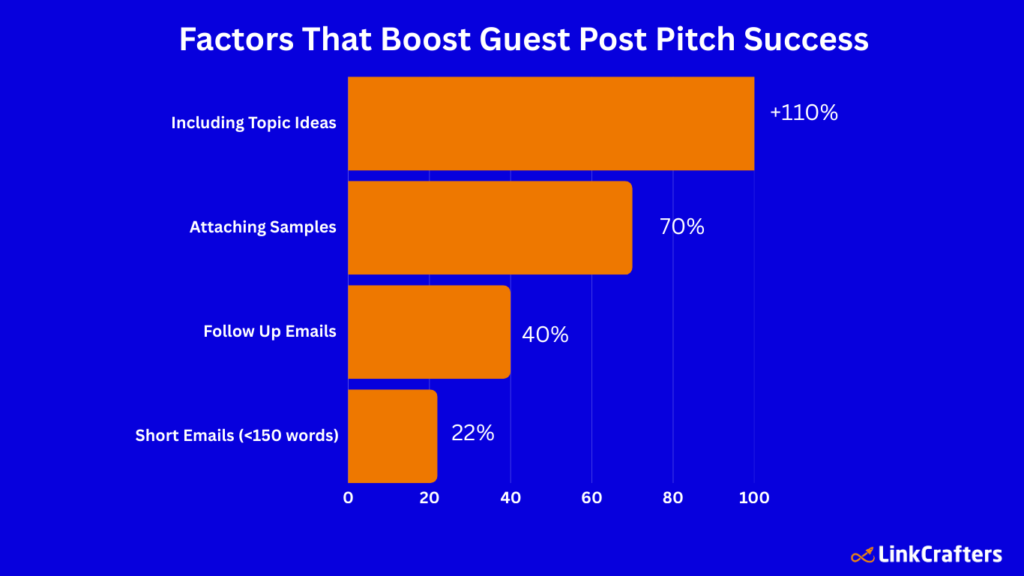
- Including topic ideas doubles acceptance odds (+110%).
- Attaching writing samples increases acceptance by ~70%.
- Short outreach emails (<150 words) improve acceptance by ~22%.
Outreach Response & Timing
- 65% of outreach replies come within the first week.
- Follow-ups increase response rates by 40%.
- Average response time (when replied) is 3.2 days.
Guest Posting Quality & Site Rejection
- ~85.3% of guest posting sites are classified as low quality (low traffic & authority).
- Around 52% of blogs receiving guest post pitches accept only 1 in 10 proposals due to editorial standards.
- 80% of rejected pitches are due to irrelevance to the site’s audience.
Guest Post Impact on Traffic & SEO
- Guest contributions can drive a traffic increase of 20–30%.
- Sites with guest post backlinks have 30% higher chance of appearing in featured snippets.
- 29% of guest authors form ongoing content partnerships, generating multiple links from the same domain over time.
Guest Posting Costs
- Average cold outreach acceptance is ~3–5%, but costs vary widely: sites charge $77–$500+ for placements depending on quality.
- High-quality placements often cost more but can provide stronger SEO value and traffic.
Digital PR and Editorial Link Statistics
- 48.6% of SEO professionals say Digital PR is the most effective link-building tactic, far ahead of guest posting (16%) and linkable assets (12%).
- Digital PR campaigns result in a high-authority backlink (DA 70+) in 68% of cases, meaning most campaigns produce at least one strong editorial link.
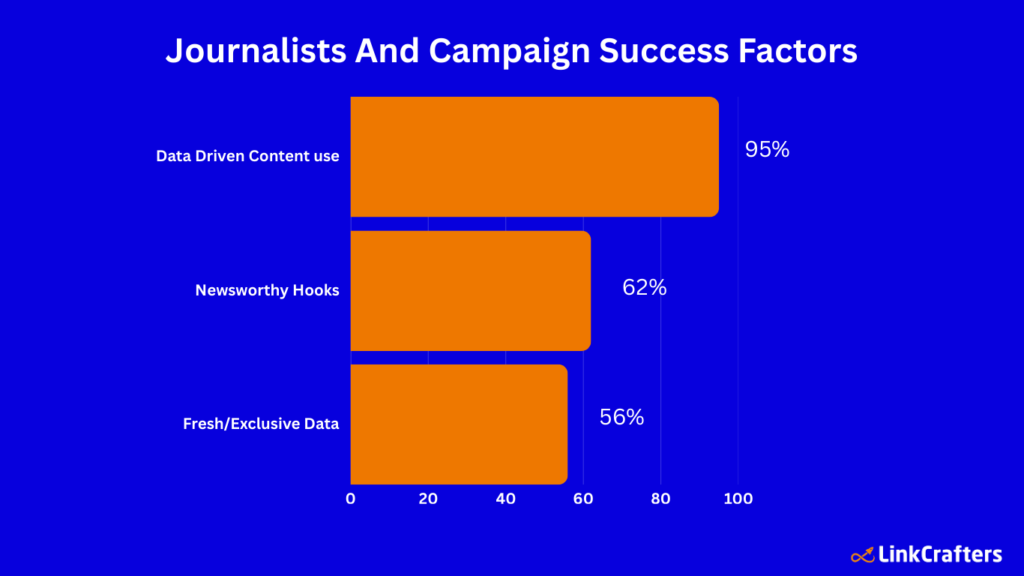
- 56% of journalists are more likely to link back when a pitch includes fresh, exclusive data or statistics, emphasizing the importance of data-led Digital PR content.
- 71% of PR link professionals focus on securing brand mentions in mainstream publications, even if a direct hyperlink isn’t guaranteed, showing the value of reputation alongside links.
- 62% of press releases with “newsworthy hooks” generate at least two high-quality editorial backlinks, pointing to the effectiveness of strong story angles.
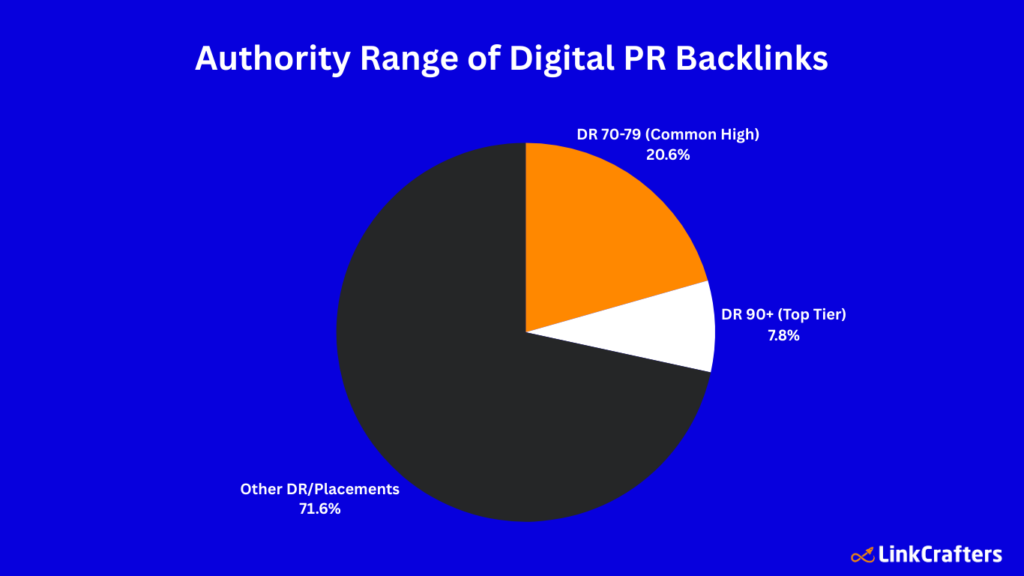
- 20.6% of Digital PR backlinks fall within the high DR band (70–79), making this the most common authority range for editorial links acquired through PR campaigns.
- Almost half (48%) of Digital PR backlinks analysed were dofollow links, compared with about 33% syndicated links, showing a strong trend toward links that pass SEO value.
- About 7.8% of Digital PR backlinks came from extremely high authority sites (DR 90+), giving campaigns access to top-tier editorial placements.
- 95% of Digital PR professionals use data-driven content to give journalists the unique angles they seek, underlining the technique’s reliance on original insights.
- 43% of SEO teams report that Digital PR delivers better-quality backlinks than traditional methods, indicating stronger link equity and trust.
Link Building Cost and Budget Statistics
- The average cost per high-quality backlink that SEO professionals consider acceptable is about $508.95.
- For competitive niches, the minimum average monthly link building budget needed to stay competitive is $8,406.
- 80.9% of SEOs believe link building costs will continue rising over the next 2–3 years due to higher editorial standards and competition.
- 61% of link builders plan to increase their link building spending in 2026, reflecting rising investment in SEO.
- 47% of SEOs spend more than £600 per month on link building as part of their marketing budget.
- In practice, over 54% of marketers spend $300–$600 per backlink, with some links (especially from high-authority sites) costing $1,000 or more.
- Nearly 66% of SEO pros allocate between 15%–25% of their total marketing budget to link-building efforts.
- 29% of large enterprises invest more than $10,000 per month solely on link building, showing how budgets scale with business size.
- 42% of startups spend at least $1,000 per month to secure quality links during early growth phases.
- 71% of agencies indicate that content creation and editorial fees are the largest cost factors in link-building campaigns.
- According to budgeting surveys, agency teams typically allocate ~32.1% of their SEO budgets to link building, while in-house teams allocate 36.03%.
- Some campaigns report that monthly retainers for link building can range from $3,000 to $25,000, depending on volume and quality targets.
Link Building ROI and Performance Statistics
Time to See Impact
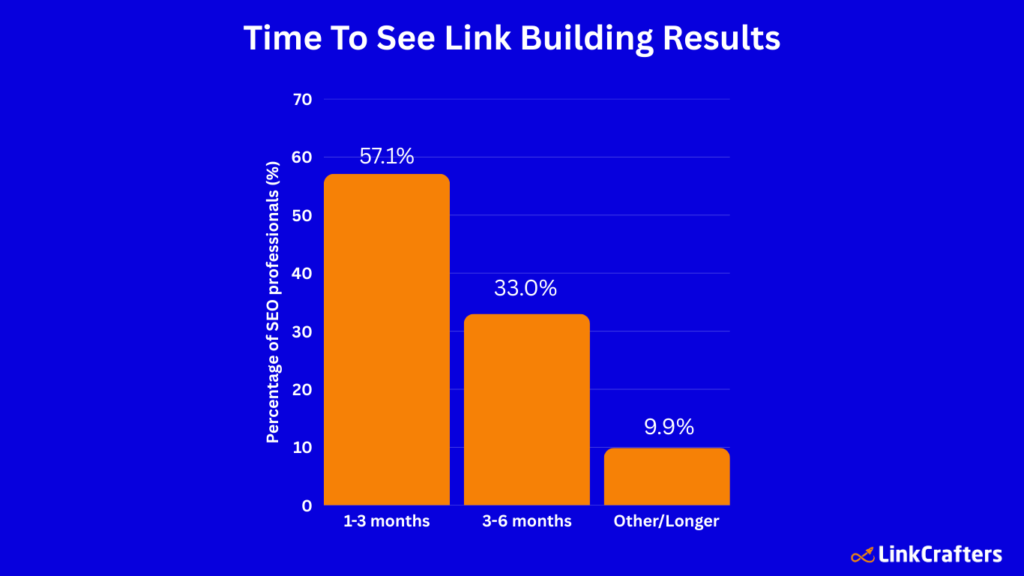
- 57.1% of SEO professionals report seeing link-building results within 1–3 months of investment, while 33.0% see results in 3–6 months.
- 89.2% of link builders observe backlink effects on search rankings within 1–6 months.
ROI and Value
- 78%–80% of marketers say they see a satisfying ROI from link building efforts.
- Some studies report an average ROI of 300–500% over 12 months from link-building investments.
- One metric shows SEO (including link building) delivering roughly $12 return per $1 spent through increased organic traffic and revenue.
Organic Traffic & Rankings Growth
- Pages ranking #1 typically have 3.8× more backlinks compared with lower-ranking pages — showing the correlation between backlinks and ranking success.
- Sites with a robust backlink profile often see ~55% higher organic traffic compared with those with weaker link profiles.
- Websites with 30–35 backlinks generate over 10,500 monthly visits, demonstrating tangible traffic gains linked to link building activity.
Adoption and Perceived Value
- 68% of marketers list link building as a priority strategy within content marketing.
- 78.1%–80% of digital marketers believe backlinks will remain relevant long-term.
Backlink Profile Stats (supporting long-term value)
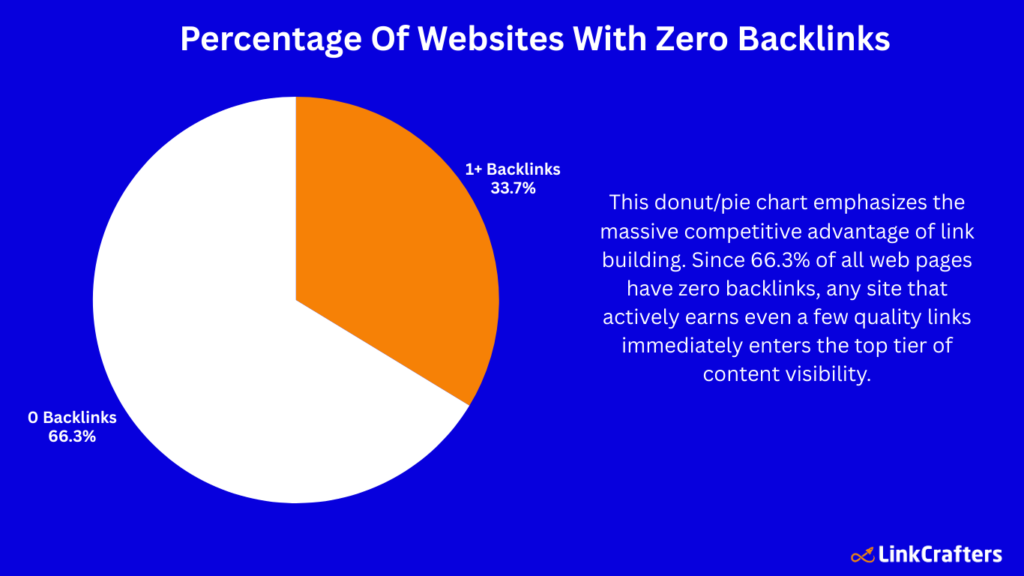
- 66.31% of web pages have zero backlinks, signaling huge competitive advantage for sites that do build links.
- More than 90% of online content doesn’t receive any backlinks at all, underlining why earning links boosts visibility.
- Only 2.2% of content gets backlinks from more than one unique domain, showing how rare quality backlinks are.
Long-Term Value
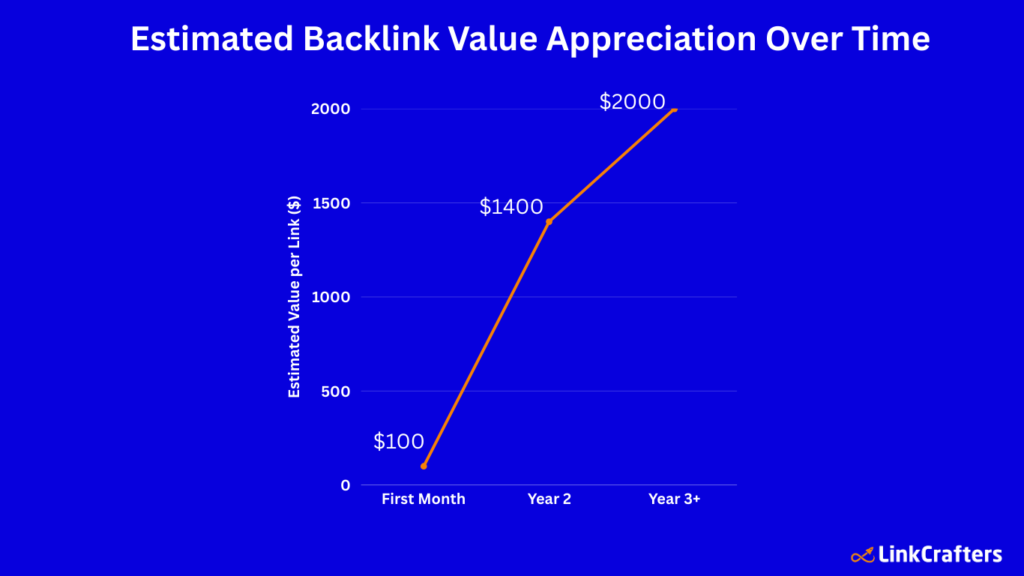
The cumulative value of backlinks rises over time — e.g., the value per link can grow from ~$50–$150 in the first few months to $800–$2,000+ by Year 2, and $1,000–$3,000+ at Year 3+.
NoFollow, Sponsored, and UGC Link Statistics
SEOs Believe NoFollow Links Still Provide Value (Even If Indirect)
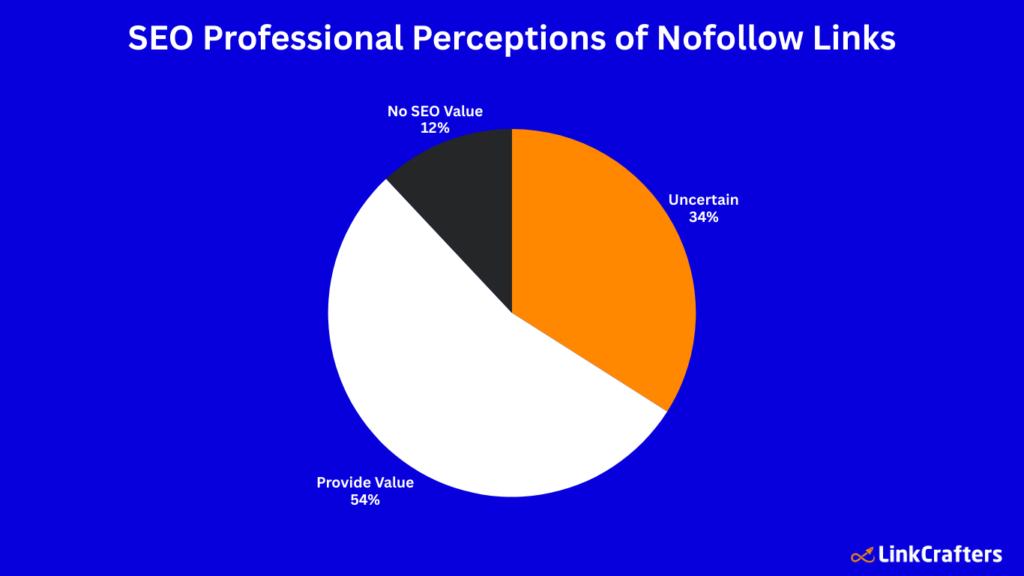
- 54% of SEO professionals believe that nofollow links contribute to a site’s authority and rankings, challenging the idea that they’re worthless. Only 12% say they have no SEO value at all, while 34% are uncertain.
- In another industry survey, 89% of SEOs state that nofollow links influence rankings, even if they don’t pass traditional PageRank directly.
- 78.8% of SEO practitioners also believe nofollow links impact rankings, though fewer than half actively build them.
Google Treats Link Attributes as “Hints,” Not Rules
- Since Google’s 2019 update, nofollow, sponsored, and UGC attributes are all treated as hints about which links to consider or exclude in search, not strict directives.
- This means Google may consider certain nofollow or tag-based links for ranking in context rather than ignoring them outright.
Natural Link Profiles Include a Mix of Follow + NoFollow
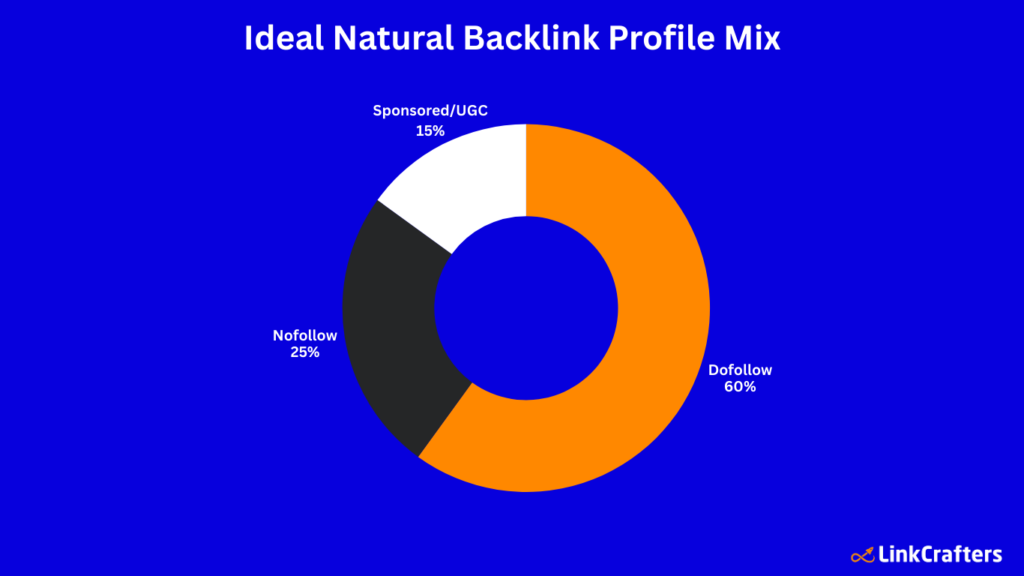
- Natural backlink profiles from competitive sites tend to have 70–80% dofollow links and 20–30% nofollow links, which aligns with what many top-ranking sites actually look like in practice.
- Some studies show that UGC and sponsored tags make up roughly 8% of all links in typical backlink profiles, suggesting these attributes are increasingly common parts of how links appear online.
- Link attribute research suggests an optimal balance could be roughly 55–65% dofollow, 20–30% nofollow, and 10–15% sponsored/UGC to signal a natural, healthy backlink profile.
Reporting and Strategy Insights from SEO Practitioners
- 69% of SEOs report tracking links that include nofollow, sponsored, and UGC attributes in reports to stakeholders, while 62% count them toward overall link targets. This shows many professionals recognize them as meaningful metrics.
- Surveys find that 48% of agencies include nofollow links in client deliverables, indicating that even nofollow tagging is actively used in campaigns.
Practical Effects Beyond Rankings
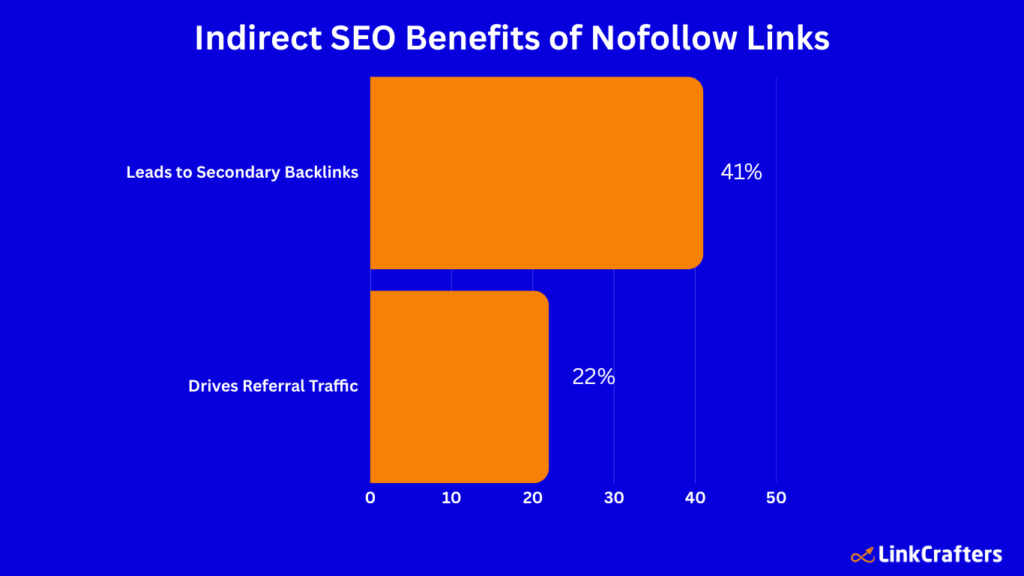
Nofollow links may not directly pass PageRank, but studies have shown that they can drive referral traffic: in one experiment, 22% of nofollow links drove measurable referral traffic and 41% led to secondary backlinks from other sites — reinforcing the idea of indirect SEO value.
AI, Algorithms, and Link Evaluation Statistics
SEO Experts Believe Google Uses AI to Detect Unnatural Link Patterns
- 44.2% of SEO professionals report actively using AI tools in their link-building and evaluation workflows, reflecting the wider adoption of machine-learning-enabled analysis in spotting quality link opportunities and potential risks.
- AI-powered backlink analysis tools improve link-building efficiency by up to 42%, indicating that AI is now a core part of detecting patterns and evaluating backlink strategies.
- AI tools identify toxic backlinks with 87% accuracy, showing that algorithms are increasingly relied upon to flag unnatural or spammy patterns that could risk penalties.
Relevance and Context Matter More Than Raw Metrics
- In link evaluation, 84.6% of SEO specialists say relevance is the primary metric used to assess backlink quality, ahead of domain authority and traffic metrics, highlighting context as a top signal.
- Studies show that 73.2% of SEO professionals believe backlinks still influence visibility in AI-driven results (like Google AI Overviews or other generative search contexts), but this influence depends heavily on context and authority rather than sheer backlink count.
- Recent SEO research indicates that contextual backlinks, unlinked mentions, and a balanced backlink + relevance profile make sites 40% more likely to appear in AI-driven summaries than pages relying on old backlinks alone.
AI-Driven Search Still Relies on Trusted Backlinks as Authority Signals
- Despite shifts in algorithms, 94% of SEO professionals believe links will continue to be a critical ranking factor even five years into the future, underscoring that authority signals in link profiles remain essential.
- Semrush research shows that high-quality backlinks correlate strongly with better authority scores in AI search contexts, meaning links still function as trust signals AI and machine learning systems use when ranking or surfacing sources.
- In industry surveys, 73.2% of SEO practitioners agree that links still impact appearance in AI search results, suggesting that, beyond algorithms, real-world professionals see backlinks as enduring trust and authority indicators.
Brand Mentions and Implied Link Statistics
Unlinked Brand Mentions as Trust Signals
- 80.9% of SEO specialists believe that unlinked brand mentions influence organic search rankings, not necessarily as direct ranking factors, but by boosting brand awareness, trust, authority, and visibility online.
- In 2025 industry data, 70.5% of digital PR professionals report tracking unlinked mentions separately from linked mentions, underlining how common and measurable they’ve become in SEO reporting.
- SEO practitioners frequently find that backlinks paired with brand mentions drive organic visibility growth up to 27–35% faster compared with link-only strategies, showing the compounded value when mentions and links co-occur.
Strong Brand Presence Correlates with Easier Link Acquisition
- Brands with strong brand signals tend to earn more editorial backlinks naturally. A 2023 SEMrush report found that businesses with a strong brand presence can enjoy approximately twice the number of editorial backlinks over time compared to weaker brands.
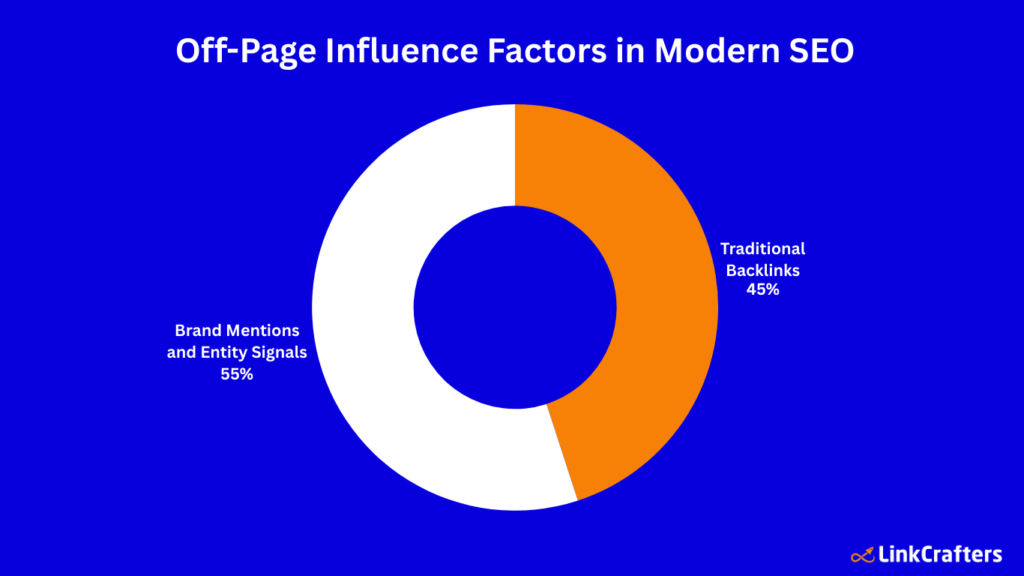
- SearchAtlas data suggests that search engines now weigh brand mentions and entity signals more heavily than backlinks in many ranking calculations (with brand mention/ entity signals comprising 55% of off-page influence vs. ~45% for backlinks in some models), indicating brands with visibility may find links easier to attract.
Digital PR Campaigns Often Generate Both Links and Brand Mentions
- Editorial digital PR remains rated the #1 most effective strategy by SEOs for earning both links and mentions in 2025, outperforming traditional guest-posting or link exchanges, because it naturally leads to placements that include both backlinks and brand mentions.
- Case examples from agency campaigns show that when brand mentions appear alongside backlinks, search engines and AI systems cite those brands up to 42% more frequently in generated answers in AI search outputs, suggesting a synergistic boost in visibility from combined signals.