Tiered link building has become one of the most talked-about SEO strategies of 2026, mostly because many marketers still misunderstand it.
Some see it as a risky, grey-hat tactic left over from the early 2010s, while others know it as a smart and scalable way to strengthen authority without relying on expensive one-to-one links alone.
The truth?
Modern tiered link building is ethical, powerful, and completely safe when done correctly.
At LinkCrafters, we use a clean, content-driven tier structure that strengthens your top-tier links, accelerates indexing, and improves ranking velocity across competitive niches.
If you want a complete, beginner-friendly, and expert-level breakdown, this guide is for you.
What Is Tiered Link Building?
In simple words:
- Tier 1 links → point directly to your website
- Tier 2 links → point to your Tier 1 links
- Tier 3 links → point to your Tier 2 links
This “support structure” boosts the authority and indexing power of your best links, making them more valuable.
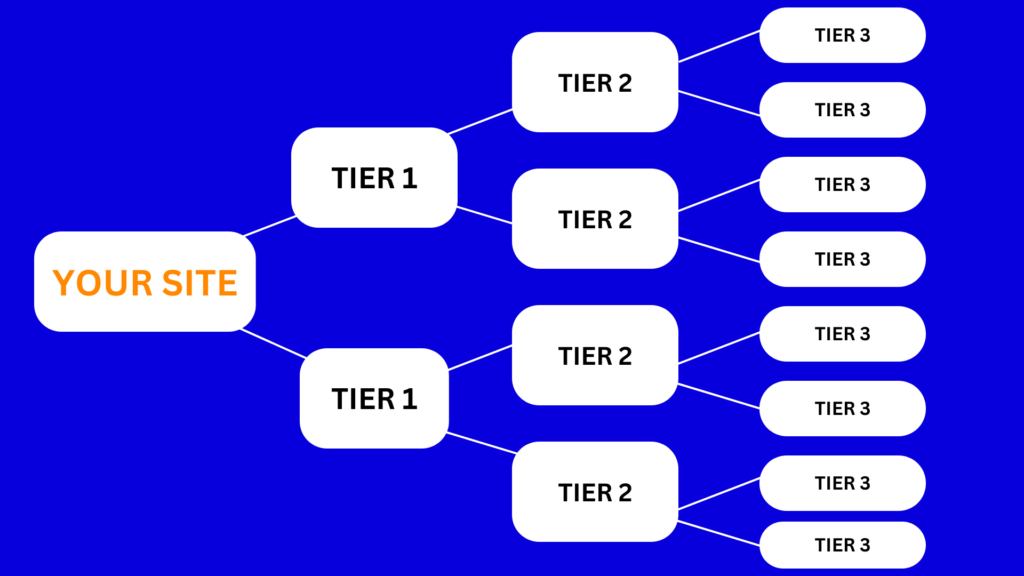
This “support structure” boosts the authority and indexing power of your best links, making them more valuable.
Why do SEOs still use tiered link building in 2026?
Because Google’s algorithm rewards strong, well-supported backlinks, not just isolated ones. When a Tier 1 link gets additional authority from Tier 2 links, it passes stronger trust signals to your site.
Misconception
Many people think tiered link building is spammy. That’s only true if you do it with:
- automated link blasts
- duplicate content
- irrelevant sources
This blog focuses only on tiered link building as a white-hat link building technique, the technique trusted by top agencies like LinkCrafters.
How Does the Layer Structure Work in Tiered Link Building?
Think of tiered link building like a building foundation.
- Tier 1 = The main pillars
- Tier 2 = Concrete around those pillars
- Tier 3 = The supporting layers beneath
Each tier strengthens the tier above it.
How link equity flows
- Tier 3 boosts Tier 2
- Tier 2 boosts Tier 1
- Tier 1 boosts your site
This creates a compounding effect, improving your site’s ability to rank in competitive SERPs.
What Are Tier 1 Links and Why Are They the Most Important?
Tier 1 links are the links that point directly to your website. Because they influence your rankings the most, they must be:
- high authority links
- niche-relevant
- manually placed
- editorially reviewed
Examples of safe Tier 1 links
- Posting on guest posting sites
- Editorial backlinks
- Niche edits on quality sites
- HARO/PR mentions
- Industry blogs
- Resource pages
At LinkCrafters, we use Tier 1 links as the core assets of the strategy, then amplify their power with clean Tier 2 reinforcement.
What Are Tier 2 Links and How Do They Strengthen Tier 1?
Tier 2 links point to your Tier 1 pages, not your website.
Their purpose:
- boost the authority of your Tier 1 links
- help them get indexed faster
- increase the link juice they pass
- diversify referral signals
Examples of safe and modern Tier 2 links
- Web 2.0 mini-blogs with high-quality content
- Secondary guest posts
- Blogger outreach placements
- Social mentions
- Resource page citations
- Press aggregator mentions
- Videos linking to Tier 1 content
These links don’t need to be as strong as Tier 1, but they must still be clean, readable, and relevant.
What Are Tier 3 Links and Do You Still Need Them in 2026?
Tier 3 links point to your Tier 2 links.
Historically, SEOs used:
- directory links
- bookmark blasts
- profile spam
- forum spam
- automated blog networks
These are outdated and unsafe.
Modern, safe Tier 3 approach in 2026
Tier 3 is optional, and when used, it must be:
- lightweight
- contextual
- natural
- non-automated
Examples include:
- social bookmarks
- branded social signals
- light Web 2.0 comments
- relevant citations
At LinkCrafters, we often use Tier 3 sparingly or not at all unless the niche demands more aggressive authority stacking.
What Are the Biggest Benefits of Tiered Link Building?
1. Strengthens Your Best Backlinks
Tier 1 links become more authoritative when reinforced.
2. Faster Indexing and Crawling
Google discovers and values your links more quickly.
3. Higher Ranking Power
Tier structures build stronger trust signals.
4. Natural Link Profile Growth
A site receiving attention from multiple levels looks more organic.
5. Cost Efficiency
You don’t need to buy dozens of Tier 1 links — you can strengthen fewer but better ones.
6. Better SEO Scaling
Tiered systems allow you to expand safely without high expenses.
Is Tiered Link Building Safe or Risky for Google Rankings?
You may wonder, “Isn’t tiered link building risky?”
The truth:
Tiered link building is safe if done correctly.
It becomes risky only when:
- using automated spam
- using link farms
- overusing exact-match anchors
- creating thousands of Tier 3 links
- pointing low-quality links directly to your site
Safe tiered link building uses:
- manual outreach
- real websites
- quality content
- diverse anchors
- brand mentions
- natural linking patterns
This is the exact approach LinkCrafters follows.
How Does Tiered Link Building Compare to Traditional Link Building?
Traditional link building = one link → your website.
Tiered link building = one link → supported by many → your website.
Traditional link building is good for:
- new websites
- low-competition niches
- foundational SEO
Tiered link building is better for:
- competitive niches
- aged sites
- authority scaling
- ranking difficult keywords
- boosting existing content
Because Tier 1 links receive reinforcement, they carry more ranking weight than isolated links.
What Are the Best Tiered Link Building Strategies?
Here are proven strategies LinkCrafters uses for clients:
1. Guest Post + Web 2.0 Support
Tier 1: Guest post
Tier 2: Blog-style Web 2.0 article linking to the guest post
2. Niche Edit + Social Signal Reinforcement
Tier 1: High-quality niche edit
Tier 2: Social mentions and branded Web 2.0 links
3. Authority Blog Post + Tier 2 Outreach
Tier 1: Editorial content
Tier 2: Blogger outreach to strengthen it
4. Content Hubs as Tier 1 Assets
Create pillar posts, then support them with Tier 2 mini-articles.
5. Brand Mention Stacking
Build unlinked citations or social brand mentions that add trust signals.
These strategies are safe, progressive, and fully aligned with natural link-building best practices.
How Can You Build a Safe Tiered Link Building Campaign?
Step 1: Identify your Tier 1 targets
Choose your strongest pages, money pages, pillar blogs, or commercial landing pages.
Step 2: Build high-quality Tier 1 links
Focus on:
- guest posts
- editorial insertions
- PR mentions
- authority blogs
Step 3: Create meaningful Tier 2 content
Write mini articles that support your Tier 1 pieces, not generic filler content.
Step 4: Add social signals
YouTube descriptions, Quora mentions, and Reddit discussions all build trust.
Step 5: Monitor indexing
Use Google Search Console, link indexers, or Ahrefs to make sure links are being discovered.
Step 6: Keep the anchor text safe
- Tier 1 = branded, natural
- Tier 2 = partial match
- Tier 3 = generic
Step 7: Scale slowly
Tiered systems must grow gradually to appear natural.
Common Mistakes People Make With Tiered Link Building?
Avoid these:
1. Building low-quality Tier 2 or 3 links
This kills link equity.
2. Using aggressive anchors
Exact-match anchors on Tier 1 can trigger penalties.
3. Overusing automation tools
Spammy links are easily detectable.
4. Not monitoring indexing
If links aren’t indexed, the whole structure fails.
5. Over-scaling too fast
Tiered systems must grow slowly and naturally.
Conclusion: Is Tiered Link Building Still Worth It in 2026?
Absolutely, yes, but only when done correctly.
Tiered link building is still one of the most effective ways to strengthen your backlinks, reinforce your authority, and scale your rankings in competitive niches. The outdated spammy approach is dead, but modern, clean, content-driven tiers are safer and more powerful than ever.
If you want to grow your site with a professionally structured, white-hat tiered link-building system, LinkCrafters is here to help you build authority strategically and sustainably. Contact us today and start growing your site.